Economy and Capital Markets 2027: “The Global Economy in the Lab – Eager Experimentation”
- Solid growth of 1.4 percent for the German economy in 2027
- Despite geopolitical risks, global trade remains surprisingly robust
- Germany can benefit from the global industrial cycle and its status as a safe haven
- DAX at around 28,000 index points by year-end
The latest economic and capital markets outlook from Helaba Research is titled “The Global Economy in the Lab – Eager Experimentation.” This is because the global economy currently resembles a giant chemistry lab, where new economic formulas are being diligently sought out and tested. Here, as there, risks and opportunities lie side by side, and trial and error is required. Market participants are currently mixing a wide variety of raw materials together to trigger a reaction. The end result is a new product that sometimes aligns more closely with the originally intended goal and sometimes less so. Helaba Research describes the potential consequences of this experimentation for the economy and capital markets in three scenarios.
Baseline Scenario: “Eager Experimentation” (70 percent probability)
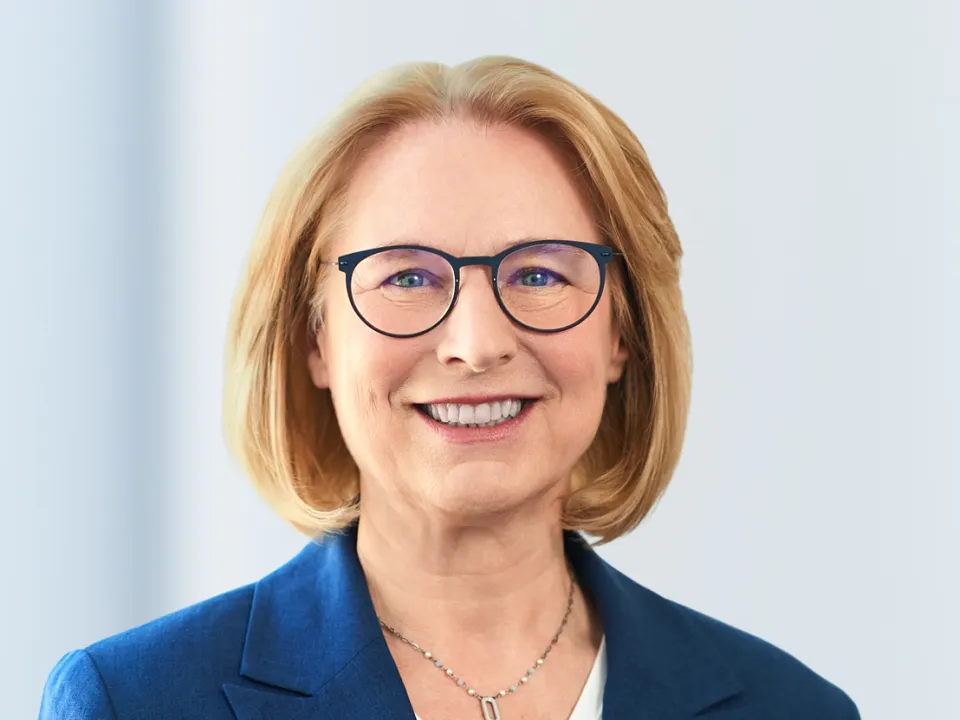
In the global economic laboratory, Bunsen burners flicker, and visibility is clouded by geopolitical haze – and yet the grand experiment remains surprisingly stable. Although geopolitical conflicts and rising interest rates posed economic hurdles, solid growth still emerged. Globalization is faring much better than anyone could have hoped, and world trade is booming. This is likely to remain the case in 2027 as well. “Despite all the risks, we are optimistic: 2027 will be marked by an upturn in the industrial cycle. Germany, in particular, will benefit from this,” comments Dr. Gertrud Rosa Traud, Chief Economist at Helaba, on the annual outlook.
For 2027, the Landesbank’s economists expect real GDP growth of 1.4% in both Germany and the euro zone. The formula for greater growth consists primarily of two ingredients: the global industrial upswing and increased investment, driven not least by government procurement and construction activity.
The export-oriented German economy is benefiting from the strengthening global industrial cycle. German companies’ full order books will translate into higher production figures in the new year. The economic situation for many companies is improving, and unemployment figures are also expected to decline. The activities of businesses and consumers are accompanied by continued increased government involvement.
The increased focus on security due to ongoing military and hybrid threats, as well as the increasingly urgent fight against climate change, requires additional public investment. However, rising government spending is associated with a further significant increase in public debt worldwide.
This also means there are dangerous substances on the shelf: high public debt limits fiscal flexibility. Nevertheless, interest rates will rise only moderately because inflation is likely to decline over the course of the year thanks to lower energy prices. This protects purchasing power and relieves pressure on central banks to raise interest rates further in 2027. “There will also be geopolitical disruptions in the new year. However, it has become clear that the economy has developed remarkable resilience. That is why global trade should not lose its footing in 2027,” explains Dr. Traud.
Asset classes in the Baseline Scenario
Stocks of German companies are likely to benefit particularly from the industrial upswing.
The DAX stock index should therefore perform slightly above average and stand at 28,000 points by the end of 2027. As growth among US technology companies slows, Helaba analysts expect the US market to show somewhat less momentum.
On the bond markets, rising government debt is viewed critically. The supply of government bonds is rising rapidly. At the same time, however, German government bonds are benefiting as a safe haven. By year-end, Helaba Research expects the yield on 10-year Bunds to be 3.25% and on US Treasury bonds to be 4.75%.
The recovery in the German real estate market remains fragile, and differentiation based on property quality and location continues. Commercial properties, in particular, remain under pressure due to higher financing rates. In contrast, residential real estate – particularly in metropolitan areas – remains scarce, causing prices to rise further.
The safe-haven asset gold is poised for a comeback. In addition to central banks, investors should also be buying more gold again as opportunity costs decline and fiscal risks grow. By 2027, the magic threshold of 5,000 US dollars will be within reach once more.
The gradual decline in oil prices is likely to exert slight downward pressure on the US dollar. Fundamentally, however, the dollar remains supported by capital inflows into the US, as the AI boom, in particular, is attracting capital from around the world. The euro-dollar exchange rate should stand at 1.15 by year-end.
Negative Scenario: “Laboratory Accident” (20 percent probability)
In the negative scenario, the global economy resembles a high-risk experimental setup: A toxic mix of political decisions and market developments is conceivable, leading to a recession. The geopolitical situation remains marked by conflicts. At the same time, AI threatens to go from being a beacon to a smouldering fire: Disappointments regarding productivity and profit expectations could lead to an abrupt halt in investment. Added to this is an unstable experimental framework for public finances. And looming over it all is a US president in “mad scientist” mode. In this constellation, the experiment spirals out of control.
In both Germany and the euro zone, gross domestic product contracts by about 2%. Annual average inflation falls to 1.5%. In light of the weak economy and declining inflation rates, the ECB cuts key interest rates below 2%. The bond market sees strong price gains – at least for bonds that serve as safe havens. Falling key interest rates lead to a decline in yields on 10-year German government bonds to around 2%. Stocks are vulnerable, given their high valuations. The DAX temporarily falls towards 17,000 index points. In the German real estate market, the already fragile recovery comes to a standstill, and purchase prices decline. The price of gold climbs to over 6,000 US dollars per troy ounce. The US dollar lives up to its reputation as a safe haven and appreciates against the euro; the exchange rate falls to 1.00 by the end of the year.
Positive Scenario: “The Golden Formula” (10 percent probability)
After years of failed attempts and given all the volatile elements involved, a positive scenario almost sounds like alchemy. But in the global economic laboratory, this feat succeeds, and the researchers discover the golden formula. New geopolitical shocks fail to materialize, and existing conflicts lose their explosive power. At the same time, AI and the industrial cycle have a stronger impact than anticipated. Additional investment, higher multiplier effects, and more dynamic global trade – a self-reinforcing upturn unfolds. The EU capitalizes on the geopolitical environment to position itself as a reliable partner and tap into new markets. Higher growth eases distributional conflicts, boosts tax revenues, and weakens populists.
Due to the weight of its manufacturing sector, the global industrial upswing gives the German economy a particularly strong boost. Gross domestic product in Germany and the euro zone rises by more than 2%. In 2027, the annual average inflation rate will exceed the 3% mark. The ECB will raise key interest rates slightly, and the yield on 10-year Bunds will climb above 4%. By the end of the year, the DAX will surpass the 33,000-point mark. Strong economic growth will also boost the German real estate market. Gold, on the other hand, is at risk of crashing. As demand for the US dollar as a safe haven declines, the euro-dollar exchange rate rises to 1.25 by the end of the year.
Full annual outlook here (german only)
Downloads
-
Press release